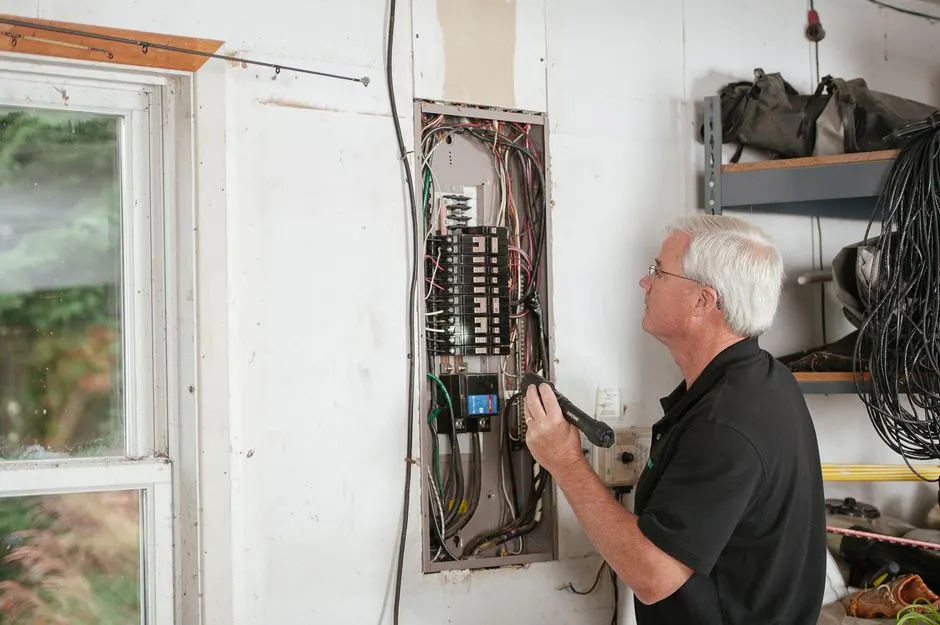
Your circuit breaker keeps tripping because it is doing exactly what it was built to do: cutting power before an overloaded wire, a short circuit, or a hot connection turns into a fire. The trip itself is not the problem - it is a warning that something on that circuit is pulling more current than the wiring can safely carry, or that the breaker itself has failed. Below we walk through the real causes we see in Stockton homes, how to troubleshoot a tripping breaker safely, and when it is time to stop resetting and call someone.
Why does my circuit breaker keep tripping in Stockton is one of the most common calls we get, and the answer almost always comes down to one of five things: overload, short circuit, ground fault, heat, or a worn-out breaker. A breaker that trips once and resets fine is usually a fluke. A breaker that trips repeatedly in Stockton, California is telling you the circuit has a real problem that will not fix itself.
What a tripping breaker is actually telling you
A circuit breaker is a safety switch that monitors current flow and shuts off power when the flow exceeds the circuit's rating. Most residential circuits in Stockton run on 15-amp or 20-amp breakers, and each one is matched to the wire gauge behind the wall. A 14-gauge wire handles 15 amps. A 12-gauge wire handles 20. Push more than that through the wire and it heats up, which is where fires start.
When the breaker trips, it is not malfunctioning. It is interrupting the circuit before the wire insulation melts or a connection arcs. That is why the first rule of a tripping breaker is simple: never replace it with a larger breaker to stop the trips. That removes the safety net and leaves the wire unprotected.
If you have already tried upsizing a breaker or you are resetting the same one every week, it is worth having a licensed electrician look at the whole panel. Our team handles electrical panel replacement Stockton for homes where the panel itself is undersized or outdated, and we can tell you in one visit whether the fix is a new breaker, a new circuit, or a full panel upgrade.
Why does my circuit breaker keep tripping in Stockton CA?
Breakers trip in Stockton CA for the same core reasons they trip anywhere, but our climate and housing stock add a few local twists. Stockton summers routinely hit 100°F or higher, and attic temperatures can climb past 140°F. Heat raises resistance in wiring and makes breakers more sensitive. Add older homes with original 1950s and 1960s wiring, and you get a city where tripping breakers are a weekly call.
Here is what we see most often in Stockton:
- Overloaded circuits - too many high-draw appliances on one breaker.
- Short circuits - a hot wire touching a neutral or ground wire.
- Ground faults - current leaking to ground, often from moisture or damaged insulation.
- Heat buildup - summer attic temps and tight panel spaces.
- Worn breakers - a breaker that has tripped hundreds of times loses calibration.
If you live in an older neighborhood like the Electrician in Stockton CA 95204 area, where a lot of housing dates to the mid-20th century, the odds of finding aluminum wiring, undersized panels, or ungrounded outlets go up sharply. Those conditions make breakers trip more often and make DIY fixes more dangerous.
The five reasons breakers trip most often
1. Electrical overload
An electrical overload in Stockton happens when the total draw on a circuit exceeds its amperage. A 15-amp circuit can handle about 1,800 watts. A single space heater pulls 1,500 watts on its own. Add a hair dryer and a TV and you are over the limit. The breaker trips, you unplug something, and it holds - until the next time.
Overloads are the easiest cause to fix because the fix is behavioral: spread the load. Move the space heater to a different circuit. Run the microwave and the air fryer on separate breakers. If you find yourself constantly juggling appliances, the real answer is adding a dedicated circuit, which is a job for an electrician.
2. Short circuit
A short circuit is a hot wire touching a neutral or ground wire. It draws a massive amount of current instantly and trips the breaker hard - often with a pop or a small flash at the outlet. Shorts come from damaged insulation, a nail driven through a wire, a loose connection inside a box, or rodent damage in the attic.
Short circuits are not a reset-and-forget problem. If a breaker trips the moment you turn it on, with nothing plugged in, you have a short. Stop resetting it and call an electrician.
3. Ground fault
A ground fault is current escaping to ground through something it should not - water, a damaged cord, a metal box. GFCI breakers and outlets are designed to catch this and trip in as little as 5 milliseconds. In Stockton, ground faults show up most in kitchens, bathrooms, laundry rooms, and outdoor outlets where moisture and heat degrade insulation over time.
4. Heat
Breakers are thermal devices. They trip faster in a hot panel. A panel in a garage that hits 120°F in July, or a breaker packed next to a dozen others in a tight enclosure, will trip at lower current than its rating. If your breaker only trips on the hottest afternoons, heat is likely a factor.
5. A bad breaker
Yes, a bad breaker can cause tripping in Stockton CA. Breakers wear out. After years of tripping, the internal mechanism loses calibration and starts tripping at lower current than it should - or fails to trip at all. A breaker that feels warm to the touch, smells like burning plastic, or trips with no load on the circuit is a candidate for replacement.
We replace worn breakers every week, and we also handle the bigger jobs. If your panel is a 100-amp unit from the 1970s and you have added an EV, a hot tub, and a mini-split since then, you are due for an upgrade. Our replace tripping breaker Stockton CA service covers both the breaker swap and the panel evaluation in one visit.
Why does my breaker trip when the AC turns on in Stockton CA?
Your breaker trips when the AC turns on in Stockton CA because the compressor's inrush current - the momentary surge when the motor starts - can be 3 to 5 times the running amps. A 3-ton AC that runs at 15 amps can spike to 60 amps for a fraction of a second. If the breaker is already warm from summer heat or the circuit is shared with other loads, that spike pushes it over the edge.
Three fixes are common:
- Dedicated circuit. The AC should be on its own breaker. If it shares with a garage outlet or a pool pump, that is the problem.
- Hard start kit. A capacitor kit reduces inrush current and often stops the trip.
- Breaker replacement. A worn breaker that trips at 80% of its rating will fail on every AC start.
If the AC trips the breaker and the panel is also old, the real fix may be a service upgrade. We install electrical diagnostics Stockton to measure actual inrush current and tell you whether the breaker, the AC, or the panel is the weak link.
How to troubleshoot a tripping breaker in Stockton safely
Troubleshooting a tripping breaker in Stockton safely starts with one rule: never work inside a live panel. Everything below is done with the breaker off or from outside the panel.
- Identify the circuit. Look at the label on the panel door. If it is blank, turn off the breaker and walk the house to see what lost power.
- Unplug everything on that circuit. Every lamp, charger, appliance, and power strip.
- Reset the breaker. Push it fully to OFF, then to ON. If it holds with nothing plugged in, the circuit is fine and the load was the problem.
- Add loads back one at a time. Plug in one item, wait a minute, then the next. The item that trips the breaker is your culprit.
- Check for heat and smell. A warm breaker, a scorch mark, or a burning smell means stop and call an electrician.
If the breaker trips with nothing plugged in, you have a wiring fault. That is not a DIY fix. Call us and we will trace it with a meter and thermal camera.
Common mistakes that make tripping worse
The most common mistake is replacing a 15-amp breaker with a 20-amp breaker to stop the trips. That does not fix the overload - it removes the protection and lets the wire overheat. We have seen melted insulation and charred framing from exactly this.
Other mistakes we see in Stockton:
- Using extension cords as permanent wiring. A 16-gauge cord on a 20-amp circuit is a fire waiting to happen.
- Ignoring a breaker that trips only sometimes. Intermittent trips usually mean a loose connection that is arcing.
- Resetting a breaker that trips instantly. That is a short circuit. Stop and call.
- Piling multiple power strips on one outlet. Daisy-chained strips are a classic overload setup.
- Assuming a new breaker fixes everything. If the wiring is undersized, a new breaker will trip just as fast.
One more: never tape a breaker in the ON position. That defeats the safety mechanism entirely and is a code violation.
When to call a professional
Call a professional when the breaker trips with nothing plugged in, when it trips more than once a week, when you see scorch marks or smell burning, when the breaker feels hot, or when you have already replaced the breaker and it still trips. Those are signs of a wiring fault, a failing panel, or a circuit that needs to be split.
Jensen Electric Services handles tripping breaker calls across Stockton every day. We diagnose the circuit, replace what is worn, and tell you plainly whether you need a new breaker, a new circuit, or a panel upgrade. No guesswork, no upsell.
If you are also adding an EV or a hot tub, we can plan the load at the same time. Our Level 2 EV charger install in Stockton, California service includes a panel load calculation so you know the circuit can handle it before we install anything.
Frequently Asked Questions
Why does my circuit breaker keep tripping in Stockton CA?
The most common causes are overload, short circuit, ground fault, heat, or a worn breaker. In Stockton, summer heat above 100°F and older wiring in mid-century homes make all five more likely. If the breaker trips with nothing plugged in, it is a wiring fault and needs an electrician.
How do I stop my breaker from tripping in Stockton, California?
Start by unplugging everything on the circuit and resetting the breaker. If it holds, add loads back one at a time to find the culprit. Spread high-draw appliances across different circuits, and if it still trips, call an electrician to check the wiring and breaker.
When should I call an electrician for a tripping breaker in Stockton?
Call when the breaker trips with no load, trips more than once a week, feels hot, smells like burning, or shows scorch marks. Also call if you have already replaced the breaker and it still trips. Those point to a wiring or panel problem, not a simple overload.
Can a bad breaker cause tripping in Stockton CA?
Yes. Breakers wear out after years of tripping and lose calibration, so they trip at lower current than their rating. A breaker that feels warm, smells, or trips with nothing plugged in should be replaced. We test and replace worn breakers as part of our diagnostic visit.
How much does it cost to fix a tripping breaker in Stockton?
Typical 2026 pricing in Stockton runs $150 to $350 for a breaker replacement and diagnostic, and $1,200 to $3,500 for a panel upgrade if the panel is the problem. We give you the number before we start, so there are no surprises.
Get help with Electrician in Stockton
If your breaker keeps tripping, stop resetting it and let us find the cause. Jensen Electric Services is a licensed Stockton electrician serving homes across San Joaquin County, and we can usually get to you the same day.
Call (833) 363-1463 to schedule a diagnostic visit. We will trace the circuit, test the breaker, and give you a straight answer on what needs to be fixed.